
Digital marketing has totally reshaped brand-audience interactions. Companies no longer depend only on traditional advertisements to promote their products and services. They now use digital channels to share information, attract potential customers, and build long-lasting relationships. Among these channels, email marketing continues to be a valuable strategy for businesses of different sizes. A well-planned email marketing strategy helps businesses share relevant messages, strengthen customer relationships, and support long-term growth.
Email marketing allows companies to communicate directly with people who have agreed to receive their messages. Businesses can share product updates, educational information, exclusive offers, company announcements, and personalized recommendations through email. Unlike public social media posts, email messages are delivered directly to a subscriber’s inbox, although successful delivery depends on factors such as sender reputation, email quality, and spam filters.
A well-planned email marketing strategy focuses on sending the right message to the right audience at the right time. It extends far beyond mere product promotion. It is about understanding customer needs, providing useful information, and encouraging meaningful interactions that support business growth.
What Is Email Marketing?
Email marketing is a digital marketing method that uses email to communicate with potential customers and existing clients. Businesses use it to introduce their services, promote products, distribute newsletters, announce events, and maintain relationships with subscribers.
For example, a digital marketing agency may send a monthly newsletter containing SEO tips, social media updates, and website optimization advice. An online shopping business may send product announcements or discount information to subscribers who have chosen to receive promotional emails.
Email marketing can support several stages of the customer journey. It introduces new subscribers to a brand, helps interested customers understand available services, and encourages existing customers to return. Its effectiveness depends on relevant content, responsible targeting, and a clear understanding of campaign objectives.
Why Is Email Marketing Important for Businesses?
Email marketing offers businesses a direct communication channel that can support different marketing goals. A strong email marketing strategy helps companies plan useful messages for each stage of the customer journey. When subscribers voluntarily join a mailing list, companies gain an opportunity to share information with an audience that has already shown interest.
One important advantage is relationship building. Regular emails containing useful information can help customers become more familiar with a brand. Instead of contacting people only when a sale is available, businesses can provide practical advice, answer common questions, and share meaningful updates.
Email marketing also supports customer retention. Existing customers may appreciate information about new products, helpful tutorials, relevant services, or loyalty benefits. These communications can encourage repeat purchases when the content matches their needs.
Another advantage is measurable performance. Marketers can review campaign reports to understand delivery, clicks, conversions, and unsubscribe activity. This data enables them to recognize high-performing messaging and implement refinements.
Email campaigns can also be automated, reducing repetitive work. For instance, a welcome email can be sent automatically when someone subscribes to a newsletter. Automation allows businesses to maintain communication more consistently while focusing on strategy and content quality.
Different Types of Email Marketing
Businesses use different types of emails depending on their goals and the information they want to communicate.
1. Welcome Emails
Welcome emails are sent to people who subscribe to a mailing list or register for a service. They introduce the business, explain what subscribers can expect, and provide helpful information. A welcome email can also direct readers to useful website pages or popular resources.
2. Promotional Emails
Promotional emails communicate special offers, discounts, new product launches, and seasonal campaigns. For example, a fashion retailer may inform subscribers about a new clothing collection. These emails should clearly explain the offer and include an appropriate call to action.
3. Educational Emails
Educational emails provide practical knowledge related to a business’s industry. A digital marketing professional might share information about keyword research, content planning, or social media engagement. Educational content helps subscribers learn something useful instead of receiving only sales messages.
4. Newsletter Emails
Newsletters deliver regular updates, industry insights, company news, and useful articles.They help brands stay in touch with their audience. A consistent newsletter can also direct interested readers to relevant blog posts and website resources.
5. Automated Emails
Automated emails are triggered by specific events or subscriber actions. Examples include registration confirmations, onboarding instructions, abandoned-cart reminders where appropriate, and follow-up messages. Automation should be designed carefully to avoid sending irrelevant or excessive communications.
How to Build a Successful Email Marketing Strategy
An effective email marketing strategy relies on careful planning, audience research, quality content, and performance analysis.
Step 1: Identify Your Target Audience
Before writing an email, understand who you want to reach. Consider the audience’s interests, needs, preferences, and problems. A business that understands its subscribers can create messages that answer relevant questions and offer appropriate solutions.
For example, a training institute may communicate differently with students exploring career options and professionals looking to improve their skills.Understanding these contrasts empowers marketers to deliver customized messaging that hits the mark.
Step 2: Set Clear Campaign Objectives
Every email campaign should have a specific purpose. Some campaigns aim to increase website traffic, while others focus on generating enquiries, promoting services, increasing registrations, or encouraging repeat purchases.
A clear objective makes it easier to choose the content, design, and call to action. It also helps marketers track whether the campaign hit its goals.
Step 3: Create a Permission-Based Email List
A quality subscriber list is more valuable than a large list of people who have never expressed interest in a business. Companies can encourage subscriptions through website forms, newsletter sign-ups, event registrations, and relevant downloadable resources.
Avoid purchasing email lists or sending unsolicited marketing messages. These practices can harm sender reputation and create privacy or compliance issues. Subscribers should understand what types of messages they will receive and how they can unsubscribe.
Step 4: Write Engaging Subject Lines
The subject line gives recipients an initial idea of the email’s content. A clear and relevant subject line can encourage people to open a message, while misleading language may damage trust.
For example, a subject line such as “Simple Ways to Improve Your Website Content” communicates a specific benefit. Keep the wording concise and ensure the email delivers what the subject line promises.
Marketers can experiment with different subject lines through controlled testing to learn which approaches perform better with their audience.
Step 5: Design Mobile-Friendly Emails
Many people read emails on smartphones, making mobile-friendly design essential. Emails must be optimized for mobile readability, featuring clear typography, adequate spacing, and easily tappable links or buttons.
Avoid overcrowded layouts and oversized images that make important information difficult to access. Test the email across different devices and email clients whenever possible.
Step 6: Include a Strong Call to Action
A call to action, or CTA, encourages readers to complete a particular task. Depending on the objective, the CTA may ask them to visit a blog, explore a product, download a guide, or submit an enquiry.
Examples include “Explore Our Services,” “Read the Latest Guide,” and “Register for the Webinar.” A clear CTA helps readers understand the next step without making the email confusing.
Step 7: Measure and Improve Results
After sending a campaign, review the available performance data. Identify which emails attract clicks, generate conversions, or receive more unsubscribes. Use these insights to improve your email marketing strategy and optimize future campaigns. Continuous testing and improvement are more useful than assuming that one email format will work for every audience.
The Role of Personalization and Segmentation
Personalization and segmentation enable companies to deliver highly targeted content to their subscribers.
Segmentation involves dividing a mailing list into groups based on suitable characteristics, such as selected interests, subscription preferences, previous purchases, or engagement with earlier emails. Personalization involves adapting parts of a message to make it more relevant to the recipient.
For example, a digital marketing newsletter could provide SEO resources to readers interested in search engine optimization and social media tips to subscribers interested in social media marketing.
These techniques can improve the usefulness of email communication. However, businesses should collect and use personal information responsibly, explain their data practices where required, and respect subscriber preferences.
Important Email Marketing Metrics
Measuring campaign performance helps marketers understand whether their emails are achieving the desired outcomes.
Delivery rate: This indicates the proportion of sent emails that successfully reach recipient servers. Delivery problems may point to issues with list quality or sender reputation.
Open rate: This estimates how frequently delivered emails are opened when tracking is available. Privacy features and automated activity can affect its accuracy, so it should not be treated as a perfect indicator of interest.
Click-through rate: This measures how often recipients click links within an email, according to the platform’s reporting method. It helps marketers evaluate whether their content encourages further engagement.
Conversion rate: This measures how often recipients complete the intended action, such as purchasing a product, registering for an event, or submitting a contact form.
Unsubscribe rate: This shows the proportion of recipients who stop receiving emails. A rising rate may indicate that the content, frequency, or targeting needs improvement.
Reviewing these metrics together gives marketers a more complete understanding of campaign performance.
Common Email Marketing Mistakes to Avoid
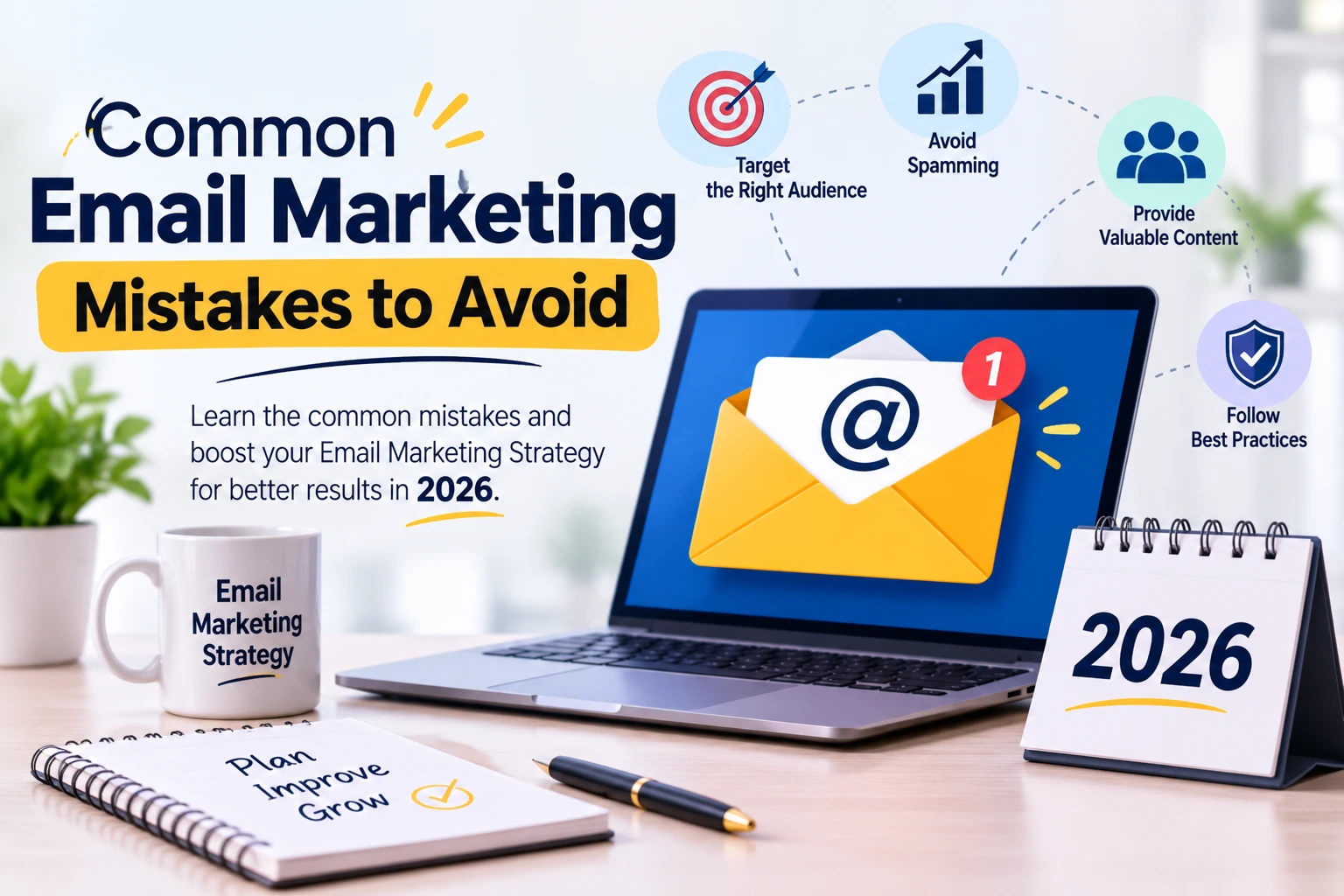
One common mistake is sending too many emails without considering the audience’s preferences. Excessive communication can overwhelm subscribers and increase unsubscribes.
Another problem is creating emails that focus entirely on selling. Subscribers may lose interest when every message contains a promotional offer without useful information.
Poor subject lines, broken links, unclear calls to action, and difficult-to-read layouts can also reduce campaign effectiveness. Businesses should avoid copied content, misleading promises, and sending messages to people who have not agreed to receive them.
To prevent these problems, marketers should maintain accurate subscriber records, create relevant content, test their emails before sending, and provide a straightforward unsubscribe option. Following applicable privacy and anti-spam requirements is also essential.
Conclusion
Email marketing remains an important part of digital marketing because it enables businesses to communicate directly with interested audiences, share relevant information, and build customer relationships. A successful email marketing strategy combines useful content, audience understanding, and consistent communication. From newsletters and promotional offers to educational resources and automated messages, email can support a wide range of business objectives.
An effective strategy begins with understanding the target audience and setting clear goals. Building a permission-based subscriber list, writing useful content, designing mobile-friendly emails, and including clear calls to action can improve the overall experience.
Performance measurement also helps marketers understand what works and where improvements are needed. By integrating targeted content, ethical communication, personalization, and ongoing testing, businesses can refine their email marketing strategy, deepen customer connections, and support long-term growth in a competitive digital environment.
Auother:https://marketingbyfahima.com/